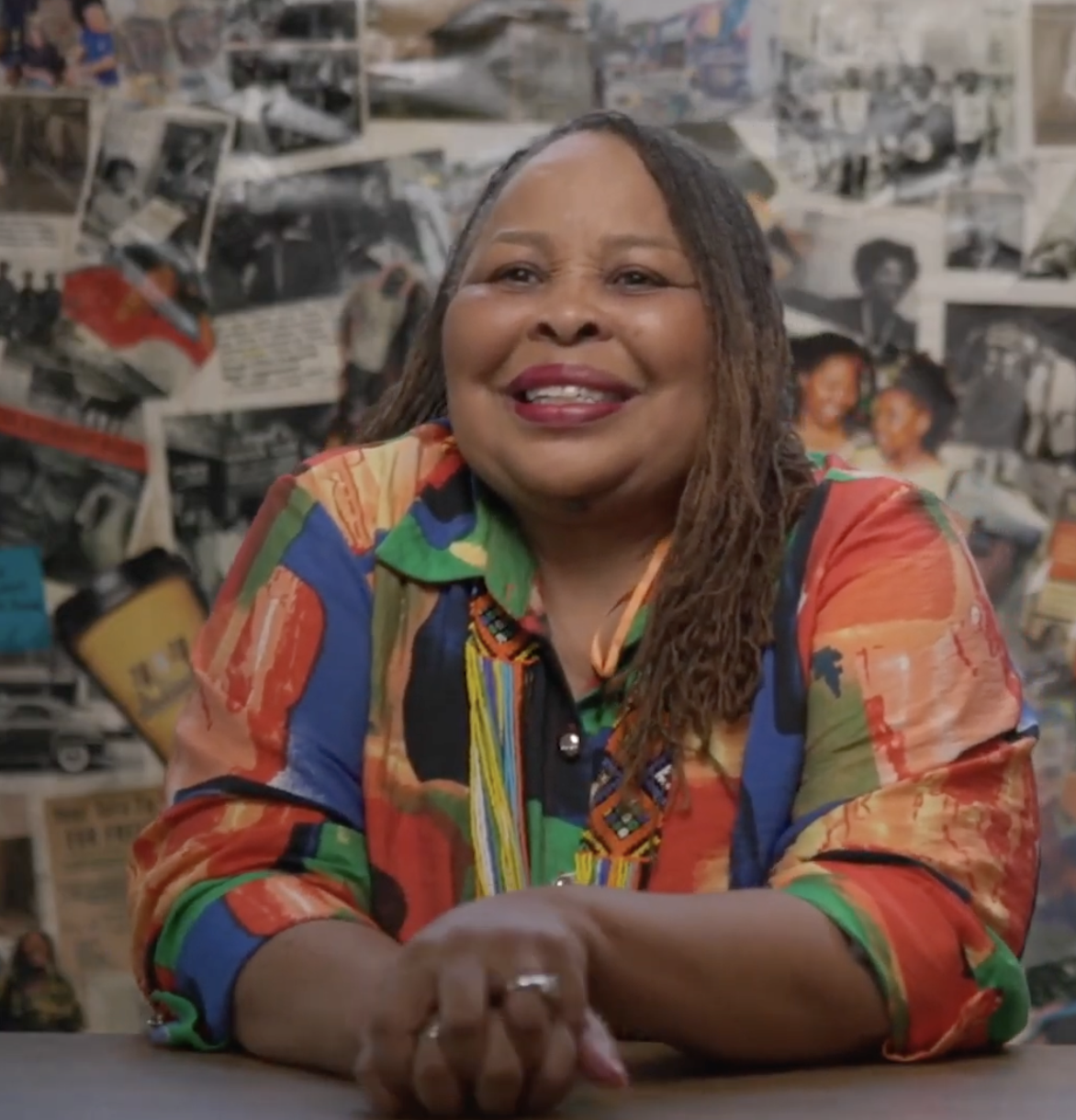
Dr. Arletta Brinson smiles while seated at a table during an interview, wearing a colorful patterned blouse.

Atlanta, GA • 1960s
Civil Rights Movement

Growing Up In Atlanta Taught Me That Justice Is Our Responsibility

Dr. Arletta Brinson grew up in Atlanta surrounded by the leaders, churches, and community organizers who shaped the Civil Rights Movement. Raised in a family deeply committed to voting rights and civic engagement, she learned early that advocating for justice was both a responsibility and a way of life.

Dr. Arletta Brinson grew up in Atlanta surrounded by civil rights leaders, political organizers and a family deeply committed to social justice. From hearing Dr. Martin Luther King Jr. speak as a child to watching her mother and grandfather lead voter registration efforts, Brinson learned that advocacy was both a privilege and a responsibility. In this reflection, she shares how those early experiences shaped her lifelong commitment to preserving Black history, serving her community and ensuring future generations understand the full story of the civil rights movement.
 

This transcript has been lightly edited for clarity.


One of the first early memories I have, probably about 5 or 6 years old, was hearing Doctor King speak at that particular convention, and I remember his speech: “Be the best of whatever you are.”

People say we were spoiled in Atlanta because, you know, you might walk down the street and see Andy Young with John Lewis. Or Coretta Scott King. So we were exposed on a daily basis to the cultural icons. You know, Joseph Lowery, just, you know, the roll call. And so you saw their example.

Again, you know, my family was very politically active. My mother talks about she wore out a pair of shoes registering folk to vote before I was born. My grandfather was part of voter registration. He was one of the captains there. He worked with Arthur Langford’s father. There’s this great picture of my grandfather and Dr. Billingslea and my mom and other local leaders talking about voter registration campaigns.

Every January the first, we were at the Emancipation Proclamation services. I had my little junior membership card. So it was just sort of infused.

I was just telling somebody this morning about just being enthused and knowing that trying to advocate for social justice is part of what we’re supposed to do.

Again, being in Atlanta, you have people like Daddy King. You had William Holmes Borders. My pastor was Dr. C. T. Vivian Ellis. You had Dr. Johnson—I’m blank on his first name—but all these were powerhouse ministers who yielded, you know, a degree of credibility and power in the city because, you know, again, the story goes about some bonds that were not passed without the assistance of the Black church.

So again, we would hear about what our civic responsibility was. We would hear stories about the movement. And it wasn’t all, you know, “Let’s go for it.” Some of the pastors were a little more conservative than others. That’s why we have the Progressive Baptist Convention now, because the young guys were like, “Oh, y’all too slow over here.”

But again, social advocacy.

I remember my pastor, Dr. Ellis, talking about the integration of the Municipal Auditorium when the World Council of Churches came here, probably late ’40s, around that time. They were involved from a civic perspective.

Again, I told someone this morning that the Black church… and the question was, “Why the Black church?”

Well, the Black church has been the organizing force in our community. Out of the Black church, we had development. We had social development because, you know, you had socializing because you couldn’t go a lot of other places. But you also had the political and the civil engagement and focusing in on civil rights. And so all of that was just sort of infused and embedded together.

I was able to remember, you know, the charge that we have. In the Baptist tradition, there’s a song that we learn that says, “A charge to keep I have.” And so just remembering the charge that was given to me by my village and what that means in terms of me giving back and continuously trying to build structures that will outlast me.

One thing, when we talk about the Civil Rights Movement, they’ll show the peaceful, you know, kumbaya moments, but they don’t show the decisions. Who had the guns? Who were protecting the marchers on the sidelines?

So I think part of the story that needs to be told was that there was a story of advocacy. There was a story of nonviolence, but there was also a story of, “This is my community, and I will protect my community.”

When you have trauma, your trauma brain maintains sights and sounds. So I remember vividly in my grandparents’ dining room when we heard the news. And I remember the look on my grandmother’s face, and I remember her wailing.

And I just remember like, “Wow. Doctor King. Really?”

And from that, up on Jonesboro, a couple of blocks up, the younger—but older than me—folk, I was in 10th grade when he got killed, they gathered and there were some riots, quote unquote, civil unrest in South Atlanta, the Summerhill community.

So again, not knowing where to put that rage, that anger, that hurt is what I remember about April 4, 1968.

I remember my grandmother’s reaction, and I think that hurt as much as hearing about him being killed.