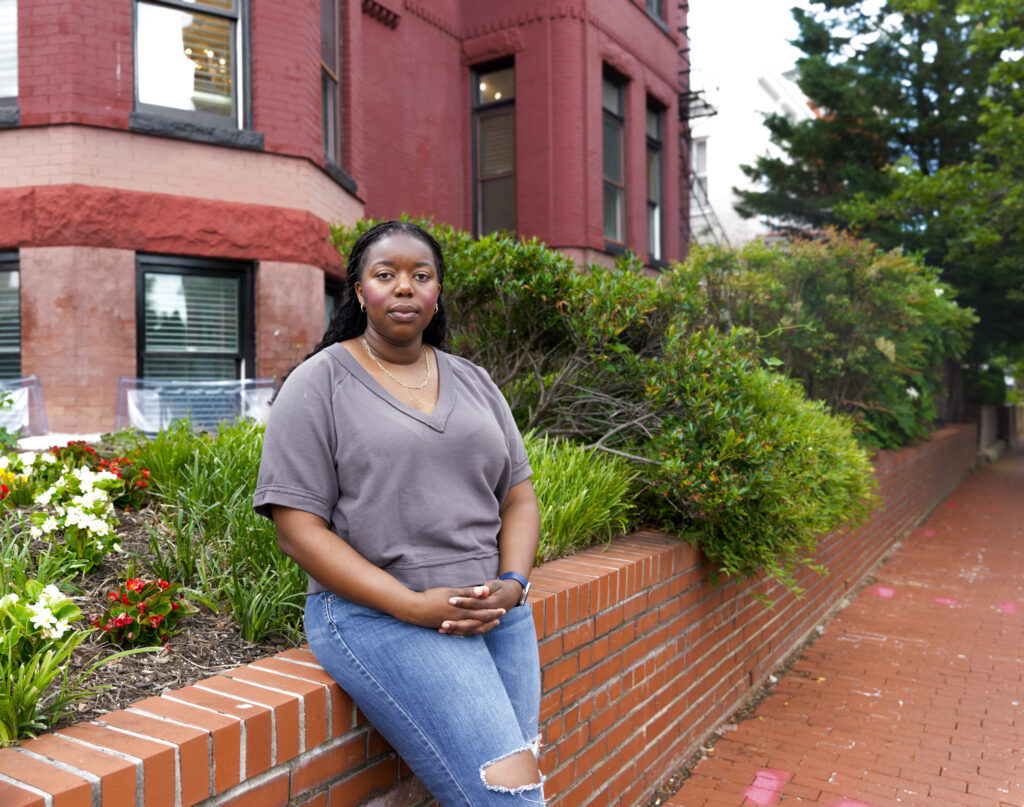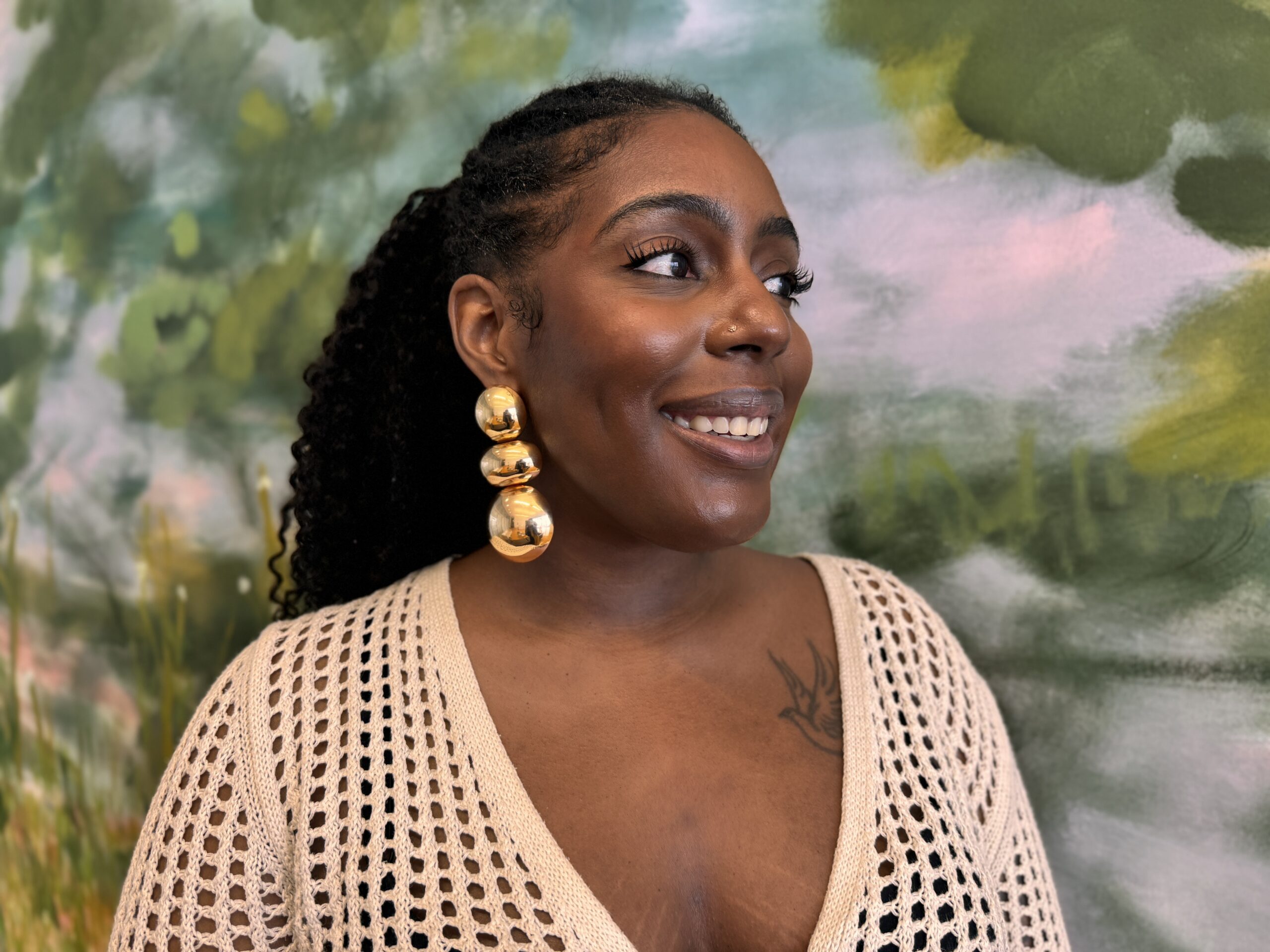
Paulah Wheeler believes improving Black health begins with listening to Black communities. (Kuwilileni Hauwanga)
Black Health Is About More Than Medicine
Paulah Wheeler reflects on why improving Black health means confronting racism, celebrating Black culture and building solutions alongside the communities they serve.
Paulah Wheeler is a public health leader and co-founder of BLKHLTH, an Atlanta-based nonprofit focused on advancing Black health equity. After seeing how public health education documented racial disparities without offering race-conscious solutions, she and three classmates founded the organization while earning their master’s degrees at Emory University. In this reflection, Wheeler shares why addressing racism, not blaming Black communities, is essential to creating healthier futures.
Black Health is an Atlanta-based nonprofit focused on the impact of racism on poor health outcomes for Black communities. We use anti-racist strategies to improve health equity, and our work is grounded in critical race theory.
We also center Black culture and Black communities in everything we do. Instead of creating programs and services for people, we create them with people.
A big part of our approach is using a strengths-based lens. Too often, health messaging focuses on deficits by saying Black people don’t eat the right foods or don’t exercise enough. We step back and ask what systems and structures are actually driving poor health outcomes.
It’s not that there’s something wrong with Black culture. There are so many strengths within our communities that we can build on, including our strong family ties, our sense of community, healthy cultural foods, music, art and creativity. Those are all health-promoting behaviors.
We were proud to help pass Georgia’s first arts-based mental health bill because we believe creativity is part of healing.
The four of us who founded Black Health were all earning our master’s degrees in public health at Emory University. We spent our classes studying statistics that showed Black communities experiencing worse health outcomes across nearly every measure, from HIV to cancer. But we weren’t learning enough about what to do differently.
The disparities weren’t race-neutral, so we believed the solutions couldn’t be race-neutral either.
This was also 2016, during the resurgence of the Black Lives Matter movement. We created shirts that said “Black Health Matters” and wore them around campus and throughout Atlanta.
People stopped us everywhere we went. They wanted to know what we were doing, and they started sharing their own experiences. They told us about doctors who didn’t listen to them and the barriers they faced trying to get quality health care.
Those conversations made it clear there was a need our community wanted filled. As soon as we graduated, we founded the organization, and nearly 10 years later we’re still doing the work.
Today we work throughout Atlanta, across the United States and internationally, including in Johannesburg, South Africa.
At our events, we incorporate mural painting, poetry, music and other forms of Black cultural expression because those are the things that bring our communities joy. We believe health promotion should reflect that.
When you look across almost any health issue, Black communities experience worse outcomes. One of the clearest examples is life expectancy, which is significantly lower for Black people than for white people.
You also see disparities in preventable conditions like maternal health. Too many Black women die during or shortly after childbirth from causes that could have been prevented. That tells us racism is influencing health care.
Many Black patients describe not being heard by medical providers, especially when they say they are in pain.
Through the Pain Equity Project and the #BelieveMyPain campaign, we’ve helped develop curriculum for medical students and other future health professionals. The goal is to help them recognize their own biases, communicate more effectively with Black patients and provide better care.
We believe students entering the health professions have to be part of the solution because they are the future of our health care workforce.