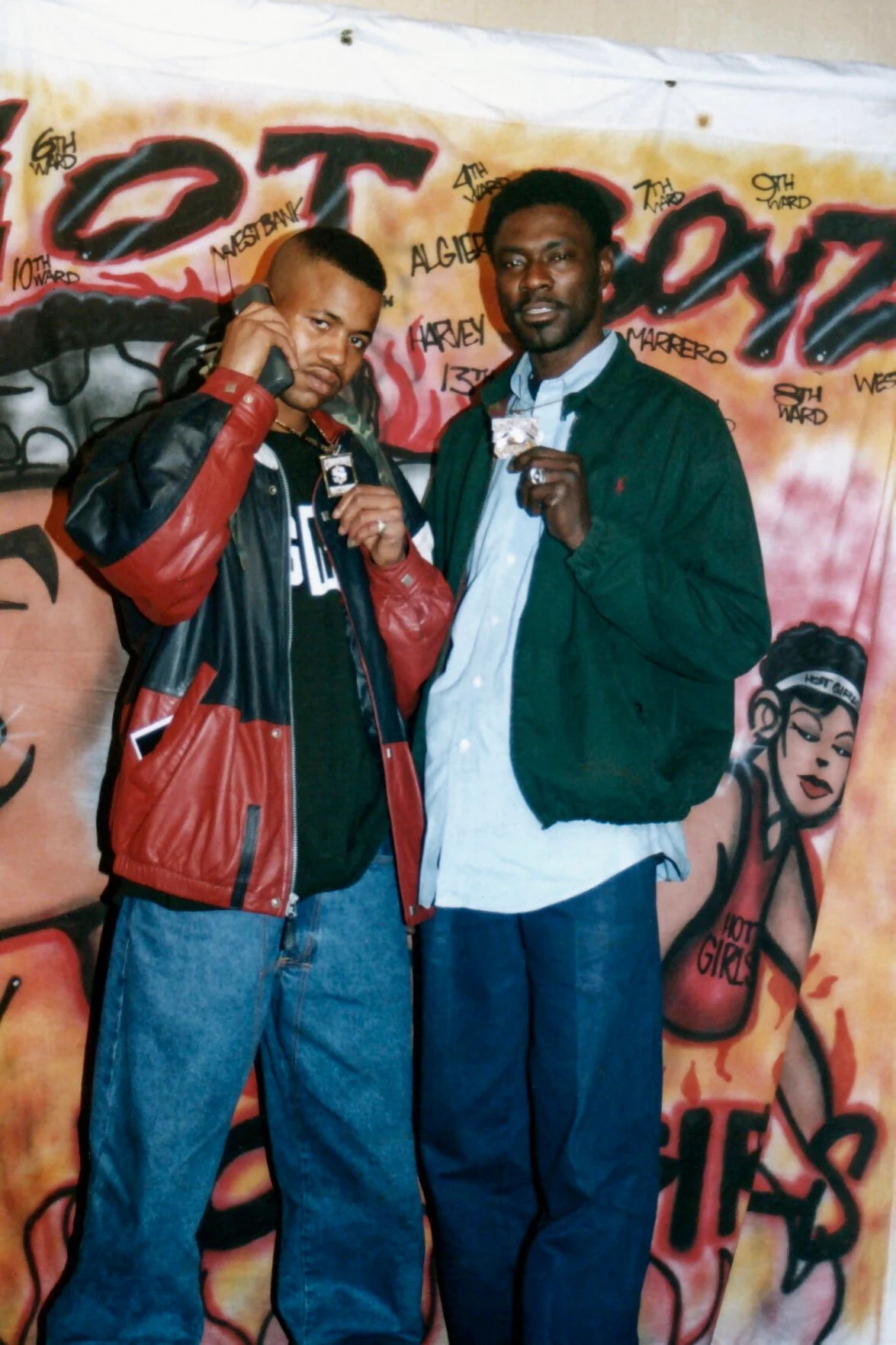
Selwhyn Sthaddeus “Polo Silk” Terrell poses for a photo with Juvenile. (Adam Mahoney/Capital B)
I’ve Been Shooting Polaroids of Black New Orleans Since 1984. There’s No Archive Like Mine.
Photographer Polo Silk has spent four decades capturing the grind and joy of the city — before Katrina and after it.
New Orleans photographer Selwhyn Sthaddeus “Polo Silk” Terrell, 62, describes himself as an accidental archivist, someone who “stumbled” into taking pictures and ended up with one of the most intimate visual records of the city’s Black neighborhoods, nightlife, and everyday joy. In this oral history, he reflects on thousands of Polaroids and prints scattered between his studio, home, and store, capturing not just streets and buildings but the grind and glamour of New Orleans culture before and after Hurricane Katrina.
This account has been condensed and edited for clarity.
I kind of stumbled into all this, but now I’m the only one that really got this kind of archive of the city, the people, the culture. People don’t always get it; they might see basketball, rap, the clubs, but they don’t see past that to what it really meant for us. I feel proud because I know what I got. I’m worldwide for Black culture off this camera, and I’m holding on to the memory of a lot of people that are no longer here. I go back through my catalog when I’m working on projects, doing my little throwback stuff, and it’s therapeutic. One of my biggest disappointments is all the people I wish I would’ve taken a picture of.
I got thousands of photos — Polaroids, prints — some in my studio on First and Cleveland, some at my house, some in my store. I mainly shoot people and the culture, not just the physical city. New Orleans culture, to me, is that grind and that joy at the same time — people doing what they have to do to make money and pay their light bill, then still dressing up, going out, second lining, being fresh. It was like that before Hurricane Katrina, and it’s still like that now, just harder because prices and rent went up. People still got to make those choices.
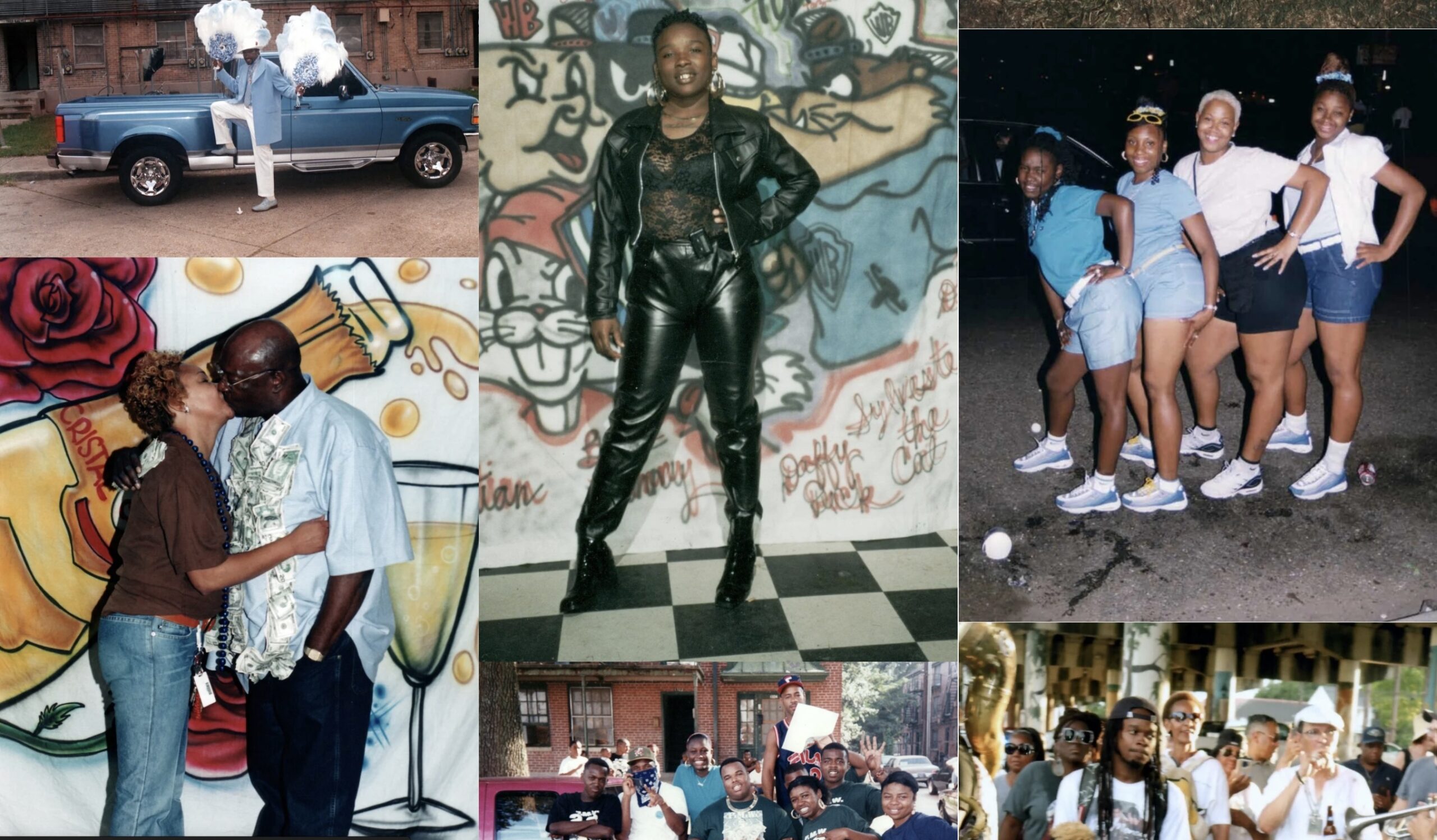
"Polo Silk" Terrell has captured thousands of photos over the years that document life in New Orleans.
Before Katrina, the city was different. On the second line routes, you had people like my grandmother, Miss Emme, and others you knew you’d see sitting outside waiting on the parade. I had spots where I knew people; I could knock on the door to use the bathroom. It was family, neighborhoods, routines. A lot of those people are gone now. Big Man’s Lounge was one of those spots — one of the last nightclubs around when hip-hop started. Big Man didn’t like rap, so the DJ couldn’t play rap till midnight. All of us who were into hip-hop would be outside, taking chairs out, waiting. That’s what our parents did, too: After working hard all week, they’d come to places like this to dress up and enjoy themselves.
I didn’t know I’d be “Polo Silk” when I started, back in ’84 trying to rap, bragging on myself. The photography turned into the movement. My work got featured in Artforum, the biggest art magazine in the world, and people started calling to tell me how big that was. Folks go to art school trying to get a feature like that. But for me, it’s always been about shining that light on the city that people don’t talk about — not just the French Quarter, but the neighborhoods, the Black Mardi Gras Indians, the second lines, the clubs. I built bonds with people. I could be in the club one night shooting them thugging with their girl, then see them at a second line with their kids and give them that picture so they have that moment. That’s the difference in my archive: People can see the love and a whole different vibe in my photographs.