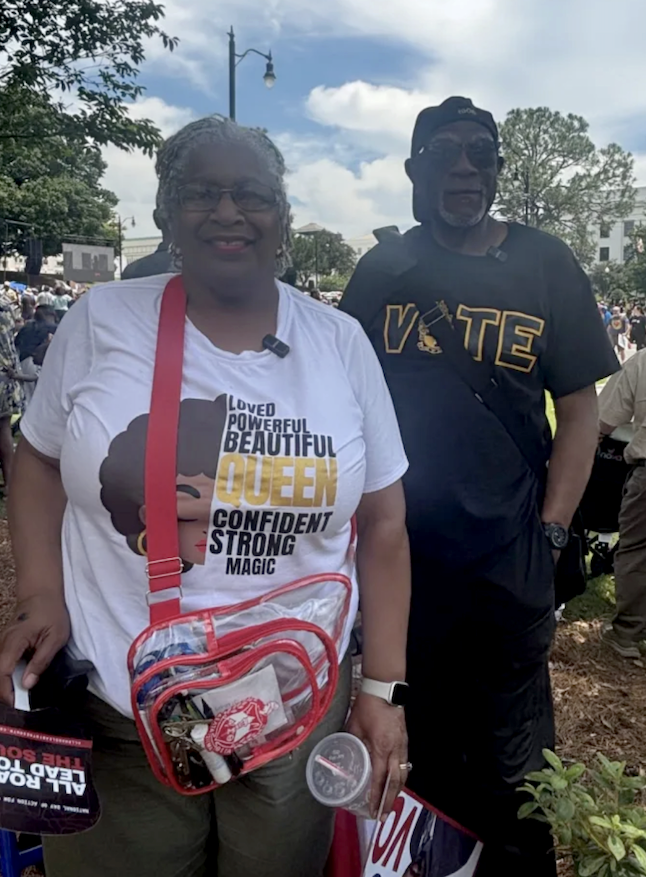
My Parents Taught Me That Voting Wasn’t Optional
After witnessing the Selma-to-Montgomery march as a teenager, Roy Wilson has never missed an election, honoring the lessons his parents and the civil rights movement passed down to him.
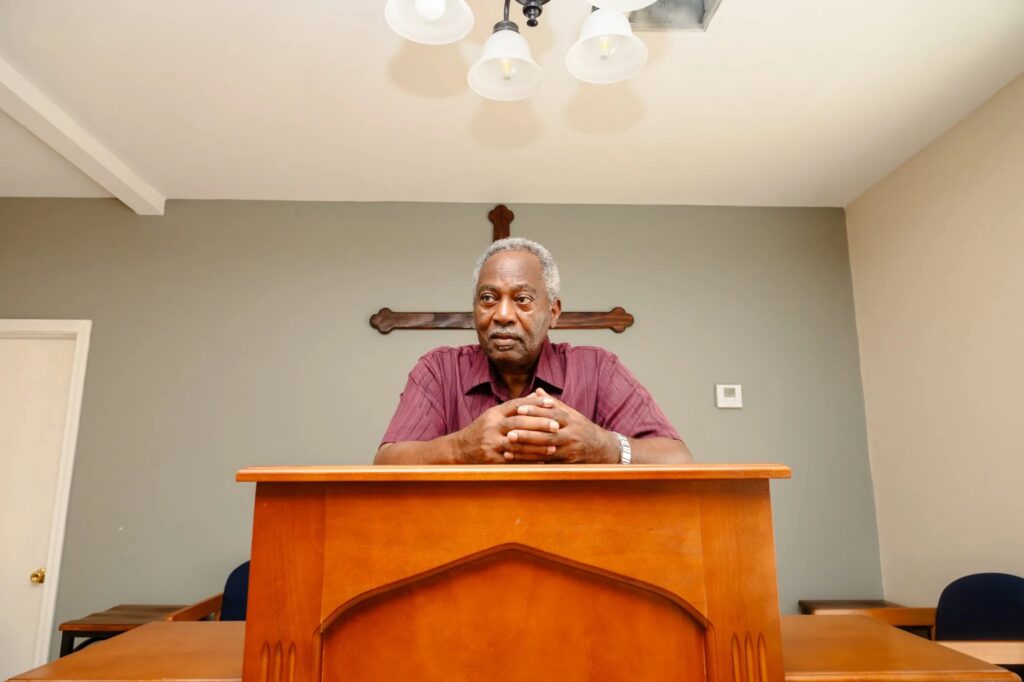
Roy Wilson, 77, grew up in Montgomery, Alabama, where his parents instilled in him the importance of voting and he witnessed civil rights history, including Martin Luther King Jr.’s powerful speech after a march from Selma.
This account has been condensed and edited for clarity.
When I was growing up, especially in the ’60s as a teenager, a lot was happening in Montgomery.
We had already gone through the bus boycott when I was a youngster, and in my teen years, the Selma to Montgomery march happened and the Voting Rights Act was passed. It was extremely important because my parents had been denied the opportunity to vote in the past.
When it came to voting, they would take the time to study the candidates because many of them we didn’t know, and of course we had to sometimes consider candidates who were not in our favor. But because we wanted the right to vote, and we decided we needed to exercise that right, we voted. My parents at least voted. When I became 18, two things I had to do: Register to vote and register for the selective service. My parents were adamant about my participating as a citizen in voting, and it was non-negotiable.
I can honestly say I have never missed voting in an election. Many times I really had nothing that I was interested in to vote for, but because I wanted to exercise my right and instill into my children that it was important, I made sure I did not miss an election.
At the culmination of the Selma to Montgomery march, when they finally arrived in Montgomery on that Wednesday evening, they camped on the grounds of St. Jude Catholic school and church and hospital. Wonderful people were there: Tony Bennett, Harry Belafonte, Sammy Davis Jr. — people we’d only seen on television performing.
Then the next morning, they proceeded to march to the capitol, where all of the Montgomery participants waited anxiously, and when the line passed, we just filled right in.
To have heard that speech by Martin Luther King Jr. has resonated. “Not long. How long? Not long” was just amazing. That speech has resonated with me through the years, and sometimes I feel like we’re still there because of things that are happening now, and it just seems like every time we make three steps forward, we take 10 back, and it’s sad. Even in other situations, I’ve found myself thinking, how long is this going to take? Even in my career, I’ve had to ask myself that question. So it was just the speech of a lifetime.
I was the first Black parks director in Nashville, and that was a full-circle moment for me because that’s where I got my undergraduate degree at Tennessee State University.
I’m also proud of the fact that the mayor here in Montgomery heard about me from someone else and decided to ask me to come on board as a consultant. To be able to write policy and procedure, to be able to interact with staff and two different directors, and to give them my advice and my counsel on certain topics, and to see it come to fruition has been amazing. It lets me know my work hasn’t been in vain, that I’ve done something worthwhile, and it now becomes a part of the legacy that I leave my children.
You never give up. It kind of goes back to what I said earlier about King’s speech in ’65 and how that speech expressed hope, perseverance, justice, and faith for me. That’s what I’ve shared with my children. We have to have faith that we can do this.