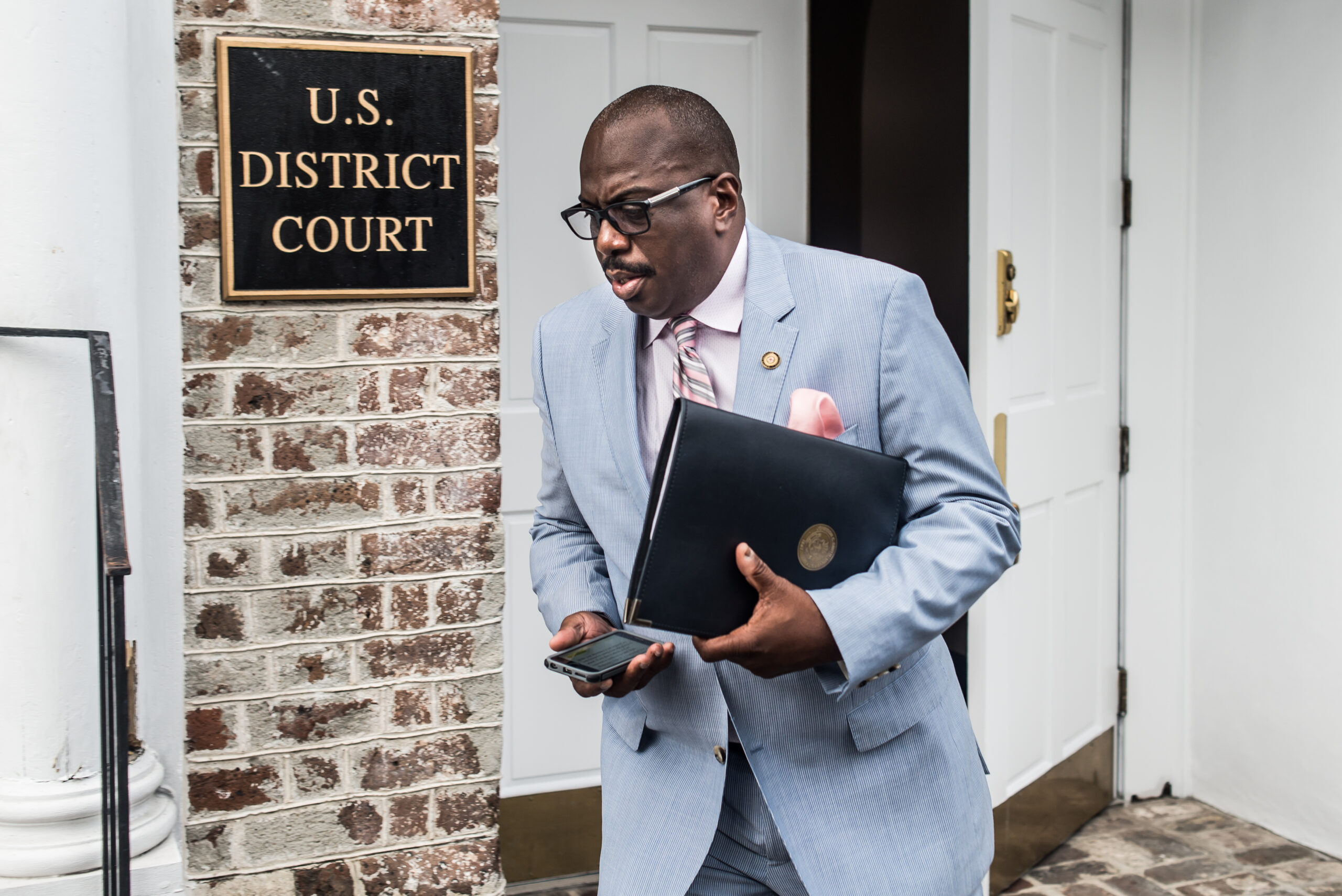
Malcolm Graham, the brother of Cynthia Hurd, exits a federal court building prior to arraignment hearings in 2015 for the gunman who killed nine people at Mother Emanuel AME Church in Charleston, South Carolina. (Sean Rayford/Getty Images)
I Lost My Sister at Mother Emanuel. America Still Hasn’t Changed.
Malcolm Graham reflects on losing his sister, Cynthia Hurd, in the 2015 Mother Emanuel massacre, and how the country has yet to confront the racism that fueled the attack.
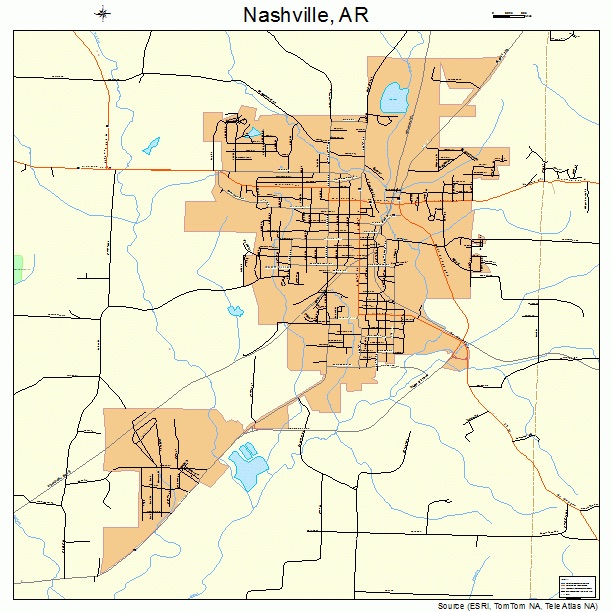
Born and raised in Charleston, South Carolina, and currently living in North Carolina, Malcolm Graham, 63, is a Charlotte City Council member whose sister, Cynthia Hurd, was killed in the 2015 Mother Emanuel AME Church shooting.
This account has been condensed and edited for clarity.
More than 10 years after the shooting in Charleston, after losing Cynthia, my mantra is: “Keep the faith. Do the work.”
Keeping the faith means that I focus on who my sister was and the contributions she made to humanity. Then I pivot to the work, whether we’re talking about enacting commonsense gun control or hate crime legislation, or talking about the things that really killed her, which are racism, hatred, and discrimination.
Cynthia was personable, she was sharp, and she was candid. She was a librarian’s librarian. She understood that space in terms of reading, literacy, and how the library could be an environment where you can get answers to all of your questions. And she cared about the community beyond the walls of the library. She cared about building a better Charleston.
Charleston has always been home for me. I was born and raised on Benson Street. Emmanuel was where I found the Lord, where I sang in the choir, where I was a member of the usher board. I spoke in Emmanuel as an adult, as a North Carolina state senator. My mother and my father are buried in the graveyard there, and so is Cynthia. Emmanuel was part of the fabric of my upbringing.
A question we should be asking now is: Have things gotten better since the shooting? A gun did the damage, but it was racism, hatred, and discrimination that killed the Emanuel churchgoers. It was an attack against a race of people. Six years after Charleston, there was a similar shooting in Buffalo, New York, where a white man went into a Black grocery store and killed people. We still got work to do.
And the work is upholding the principles of the Constitution that say that all men are created equal. The work is ensuring that, as we move forward as a country, everybody has the same opportunity to move forward, that we embrace diversity and inclusion.
There was this sentiment coming out of Charleston after the shooting that everybody forgave the killer. That was not necessarily the case. I didn’t forgive then, and I don’t forgive now. When this sentiment of forgiveness was being talked about, Cynthia was still in the morgue. That was the time when we needed to create a healthy tension, when we needed to ask tough questions — even if people had to sit in the discomfort of some of the answers.
Maybe if we had taken some time and paused and asked those tough questions, Buffalo might not have happened. We needed to pause and really peel everything back. We didn’t.