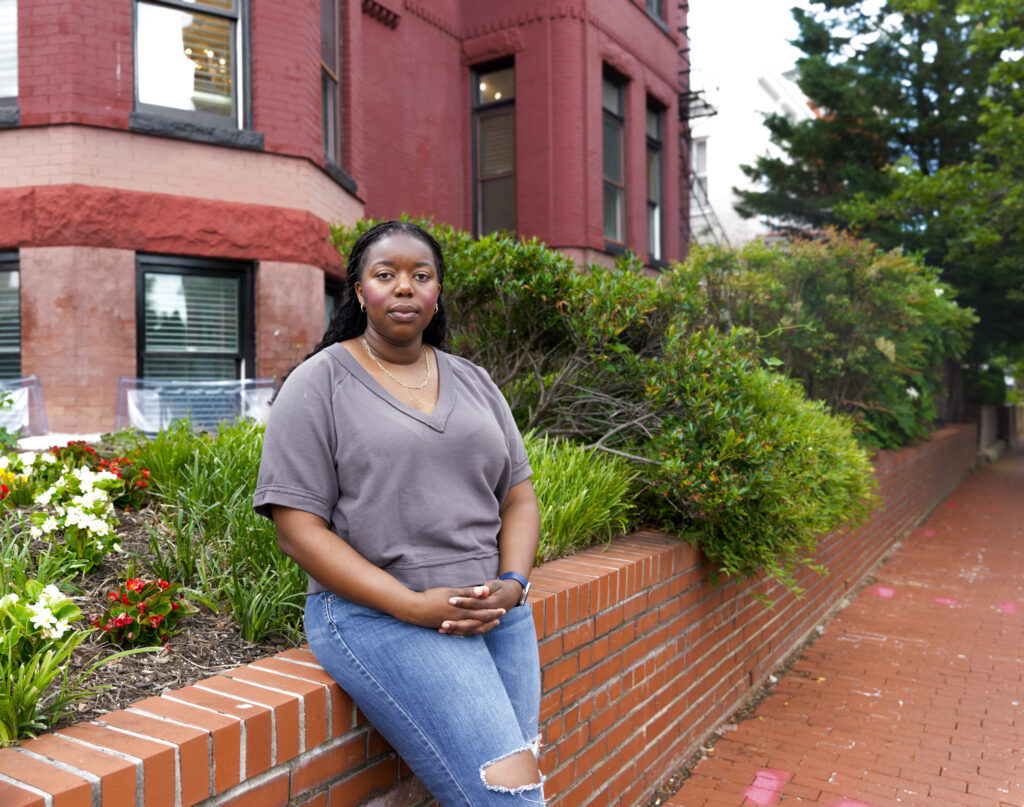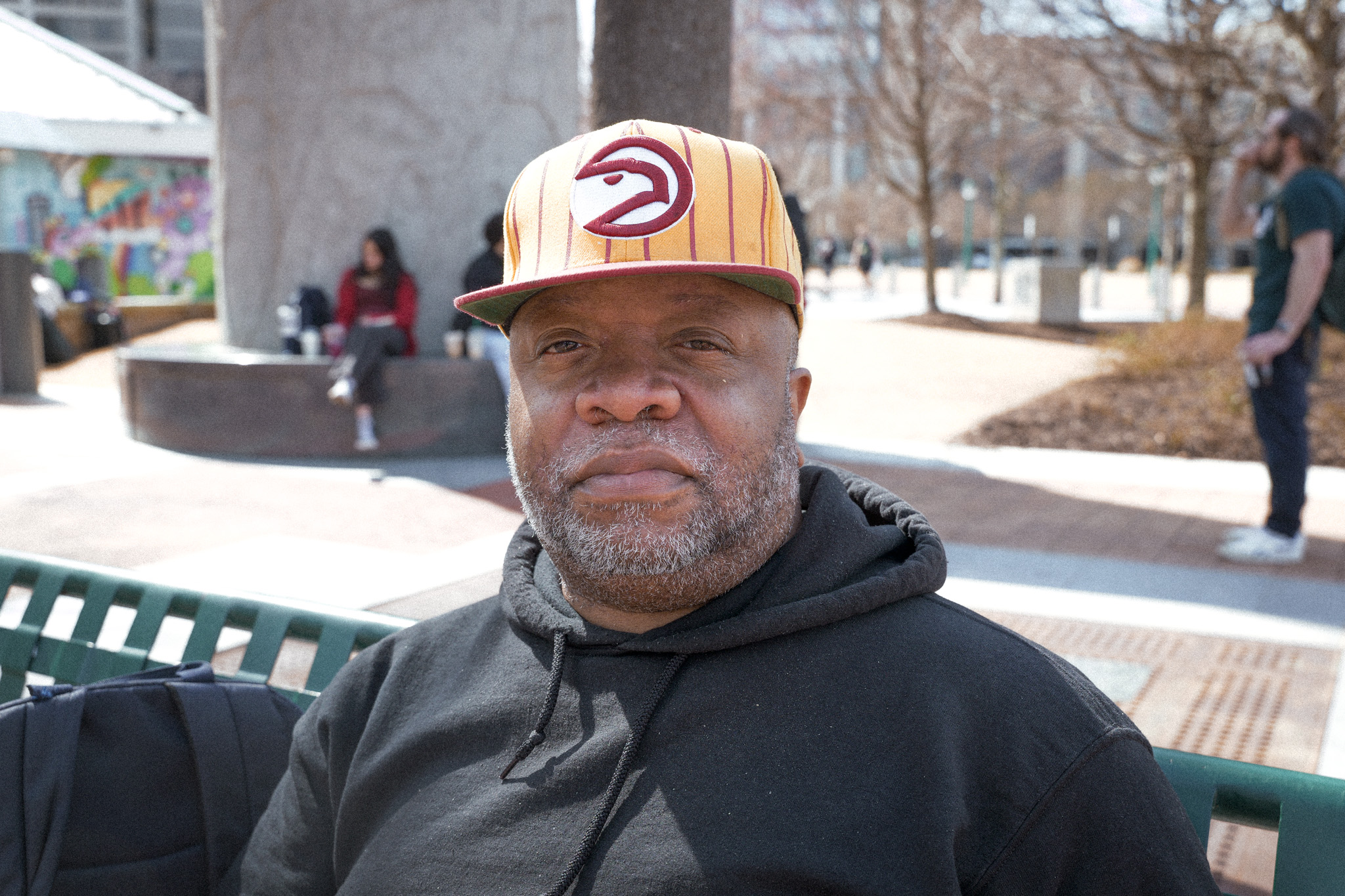
A former Tri-Cities High student recalls the challenges and tensions surrounding school desegregation in the Atlanta area. (Kuwilileni Hauwanga)
Once We Had the Same Resources as White Students, Everything Changed
After three Atlanta-area high schools merged, white and Black students attended the same campus. Larry Michaels shares how equal funding and resources helped transform Tri-Cities into one of Georgia's best-known arts schools.
This transcript has been lightly edited for clarity.
I grew up in southwest Atlanta, borderline southwest, in East Point. Camps Road area. The school was Richard Russell at the time. It’s currently Tri-Cities, and they call it Tri-Cities because it combined three city high schools into one. That was College Park, Hapeville, and East Point High School.
East Point High School was half and half, half Black and white. College Park High School was 90% Black. Hapeville High School was 75% white. Something happened, and when they combined all the schools, of course all the sports had to be combined as well.
So guys who were on the white teams, the white captains and white leaders in football, basketball, baseball, and tennis, they had to compete against the Black kids. There was a thing going on because those starting quarterbacks, those starting point guards, were no longer starting over the Black kids because they were just better.
Parents started to pull those kids out of the schools. Nowadays you can’t just move your kid to another school because you want a better school. Actually, that was a rule back then too, but they did it.
So the school became basically 60% Black and 40% white at the time of my ninth grade year. By my 11th grade year, all the white kids had gone.
It brought our morale up because, at the time, we didn’t necessarily want to be integrated that way. We went to Woodland Middle School right before high school, and the middle school was predominantly Black. There was another middle school in our area, and they were the only Black students there. So all the white kids came from Hapeville. That was the only city where they combined the three.
We were used to having white kids and families anyway, so they were there for that one year. They had the white guys who thought they were just better at debate club or whatever, but they had to compete with Black kids who were on par.
Because there were white kids there, they had to support the education with books and funding too. They had to fund the Black kids as well. So we got the same books, the same funding, the same resources they had.
We excelled above them, but when they left, the school became a magnet school for the arts. With the extra funding they had from the early days, they just kept the funding. That school became a school of the arts.
You can look it up right now. A lot of artists came out of that school. Xscape came out of there. A lot of playwrights, a lot of authors, a lot of dancers, all kinds of people came out of that one school from ’89 to ’93 because we had the funding.
When they left, we just kept the funding, and it’s now a magnet school system. Tri-Cities High School is famous for that. You remember that story from back in the day?