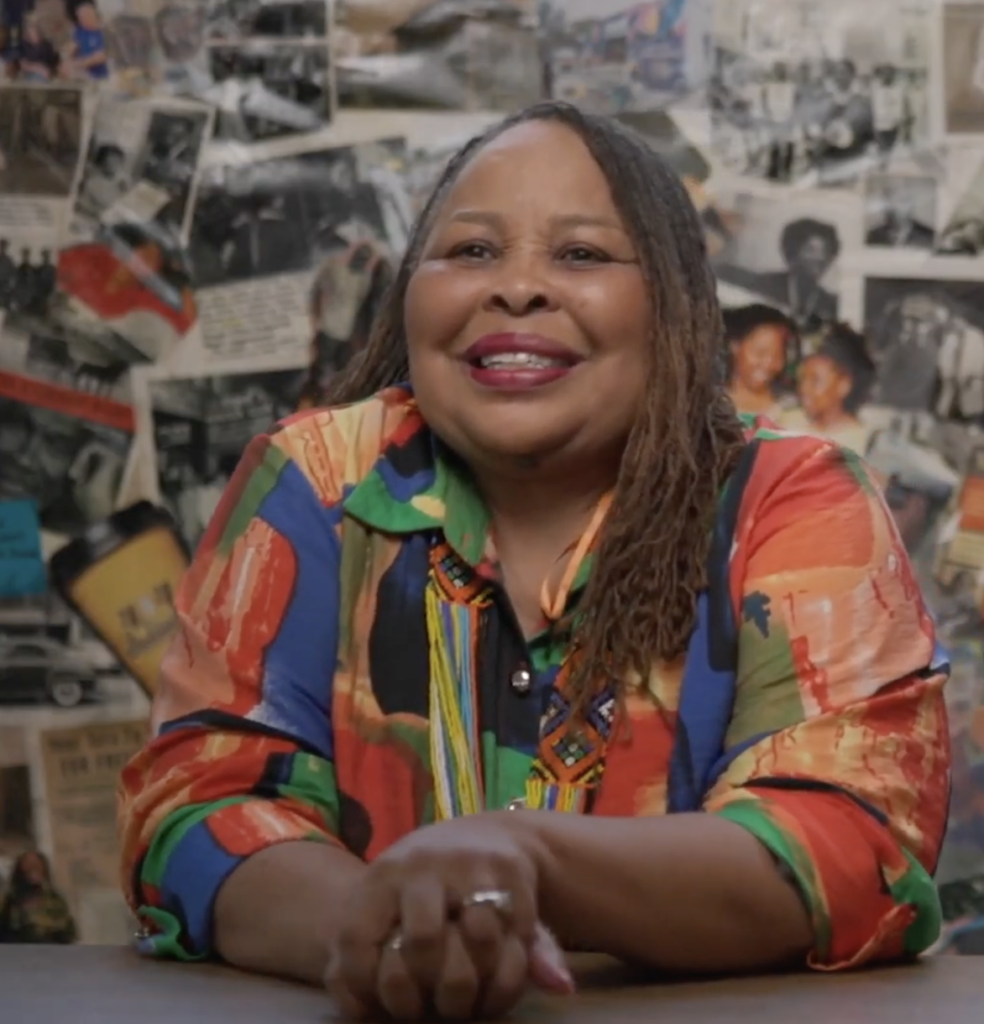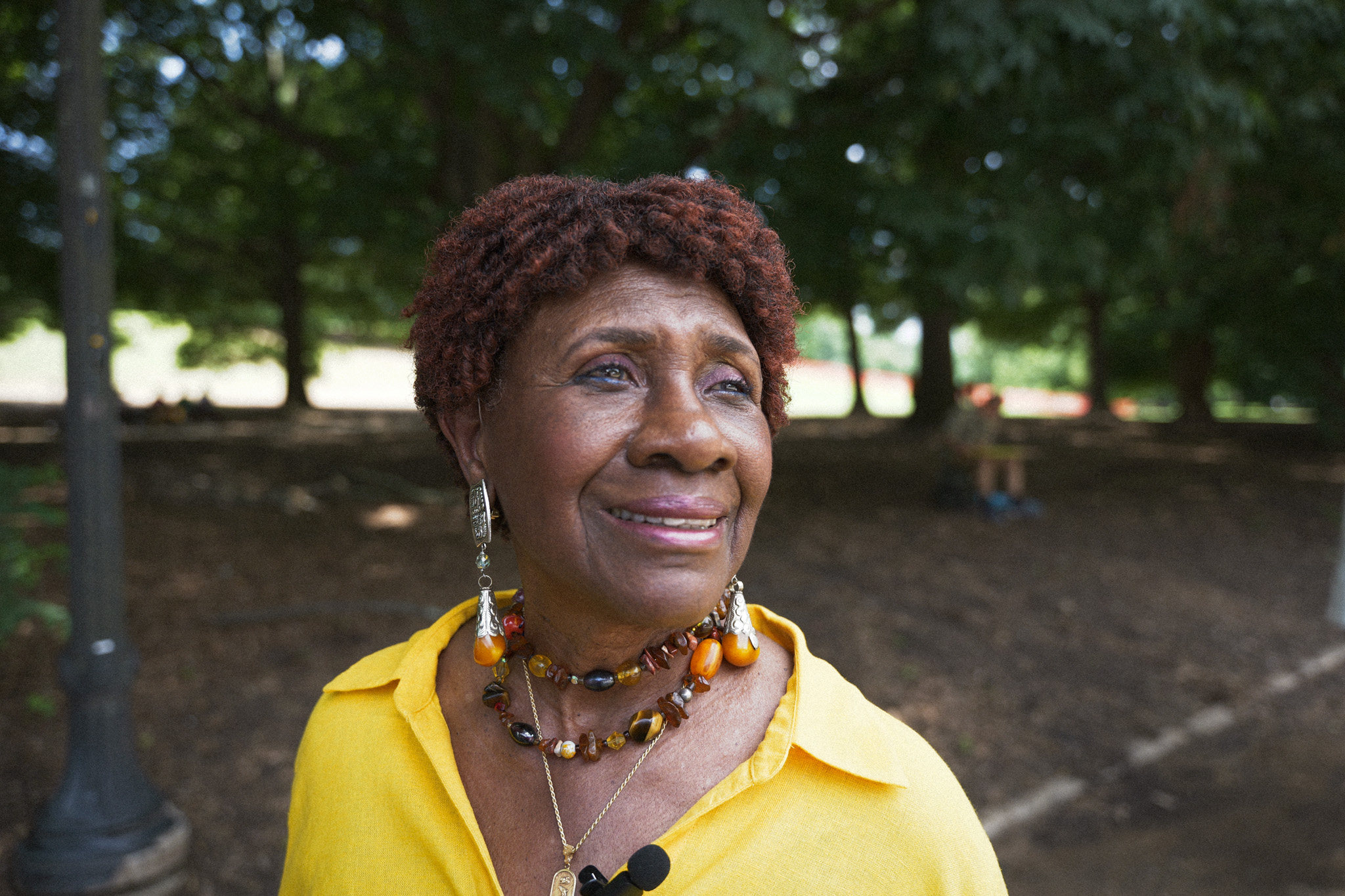
Louise Trice reflects on growing up in rural southwest Georgia during an interview for Capital B’s oral history project.
How Growing Up In Rural Georgia Taught Me The Power Of Community
Louise Trice reflects on growing up in rural southwest Georgia, where neighbors looked out for one another and every child was raised by the community.
Louise Trice grew up in Blakely, Georgia, where family, faith and community shaped her understanding of respect, generosity and responsibility. Raised on her family’s land in a close-knit Black community, she learned early the importance of treating others with dignity, even while witnessing the everyday indignities of segregation. In this reflection, Trice shares how those childhood lessons continue to guide her life and why she believes future generations must carry the fight for freedom forward.
This transcript has been lightly edited for clarity.
I grew up in southwest Georgia. That’s 200 miles southwest of here in Blakely, Georgia. I grew up in a community that was responsible for everyone. Everyone loved us. We loved them back. They were responsible for us. If they saw something that we were doing and it was out of place, inappropriate that they could call us on it. And what we did is hope that they didn’t tell our parents that they called us on it, which is different today, and we shared everything.
My father owned our land. It was 50 acres. That’s not a lot, but it was ours and we didn’t have to share crop. We just worked for our own family and that was that was the best. Because we didn’t have to stay out of school to work on our own land where sharecroppers, black children had to stay out of school because they want somebody else’s land.
So I got to experience my own family owning our own property, and so we didn’t have to miss school. They sent us all to college. Where I was raised was 202 hundred over 200 miles southwest of here. And I just remembered that my mother would go to the store to buy things. And I was just my I was so small, my head was just reached the top of the counter.
But I knew then that they called her aunt Auntie. Her name was not Auntie. Your name was Alberta and I knew then they were trying not to address us, and that’s a way of putting us down. They knew her name, but they wouldn’t call her name. And so I remember that still, how they wouldn’t even give her the honor of being called by her name.
And that’s why now, when children in the classroom. I don’t care for nicknames, I want to be called. I want you to call each other by your names. Use your name that your parents gave you because your name is important. And when I was growing up, the other people tried not to call us by our name. They call us auntie and uncle and those kind of things.
I don’t want to be your auntie and don’t want my husband to be your uncle. Just give me the respect and call me by my name. So that’s what it was like growing up. But I’m proud to have run up where I did, to receive the kind of training that I did, to be able to honor people and celebrate people and celebrate myself.
Those are the things that parents taught us. We couldn’t disrespect anyone. We couldn’t. We couldn’t disrespect our parents, obviously, and we couldn’t respect disrespect anyone, you know, because when you respect other people, you respect yourself. And that has to do with the way you carry yourself, what you have on all of that respect, all of that says something about who do you think you are?
You know what I’m saying? Who do you think we are as a people that we can run around and show ourselves to be naked? I’m not sure. I’m. I’m understanding that part about us. Why is that necessary?
That’s difficult for me. To me. We need to be going down on the path, not a path. And oh, how I can show you my body parts. I’m not sure what that’s about. It’s okay. You know what I’m saying? If that’s what you want to do, is just saying that. I’m not sure I understand what it’s about. To me, it’s disrespect to yourself.
That raisin never leaves you. You know what I’m saying? The raising never leaves you. The giving never leaves you. I can’t stop giving because we had to give my. When my father killed a halt, we had to wrap it up in white paper and distribute it down the street. The community came to your garden, and they picked whatever they wanted to, and we could do the same.
So I think that makes a big difference when everybody is asking for respect and you’re giving it to everyone. So respect. First of all is gone now. And parents are, I feel, allowing their children to just kind of do what they want to do it, say do what you want to do. Well. And that’s far from where what I was raised to do.
And so that raising, as I said, never leaves you. I’m still giving. My children are afraid I’ll just give away money. I’ll give away things because I do like to give. And but I do know that the Scripture says, if when you give, you get it back to fold. And so I’ve been blessed. I lost the spouse in 92.
He was 47. He died of a heart attack. And so I kept going with two sons to raise. And now they are doing well and have businesses of their own because raising doesn’t go away, you know. So I’m glad to be here today at Piedmont Park celebrating Juneteenth.
Freedom, freedom from.
All that’s negative. We still need to be aware of that because we’re not free yet. We still don’t get the jobs we should get. We’re still looked at as less than, no matter where you are and how good you’re feeling and what kind of job you have, I feel we are still looked upon as less than, and that’s why we have to keep celebrating Juneteenth and everything like it, because we’re just not there yet.
And young people may think so, but we’re not. And we’re in the colors, and all of that doesn’t make us free. It doesn’t give us the rights we should have. And we have to keep fighting for that. And we have to keep encouraging our children to do it. Because now I’ll be 79 my next birthday and I’m getting around with two hip replacement, two knee replacement, a shoulder that’s rubbing bone to bone.
So my time for that, I would say it’s not what it used to be. So we have to encourage our children to carry on.