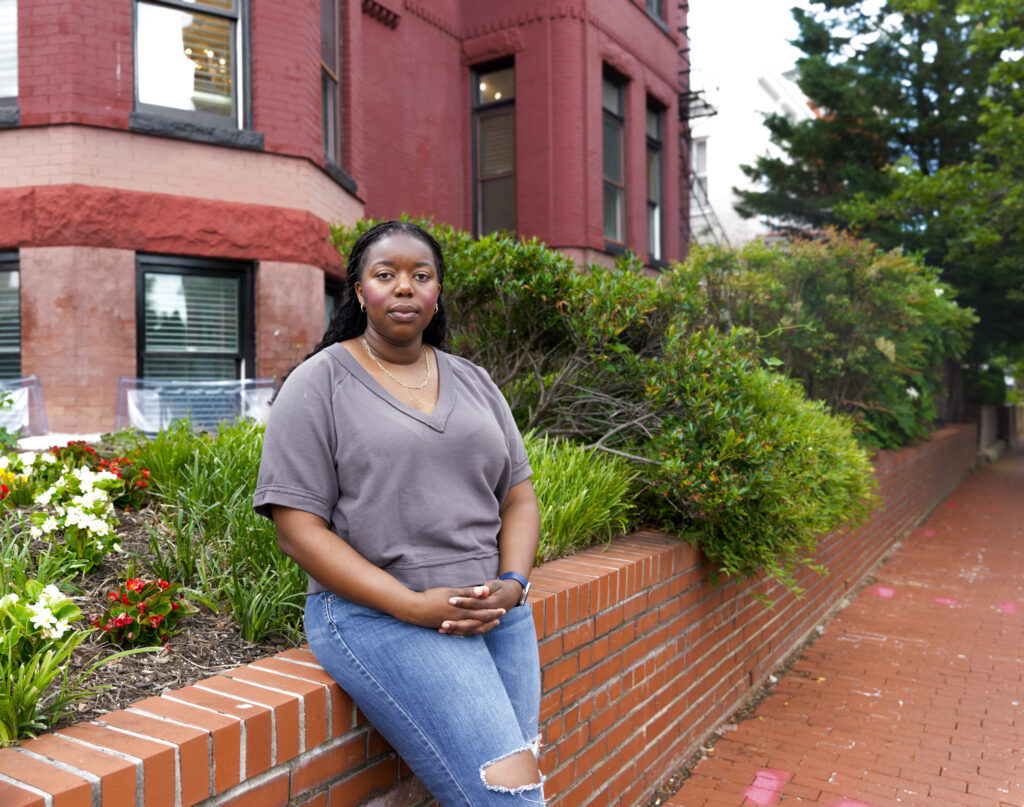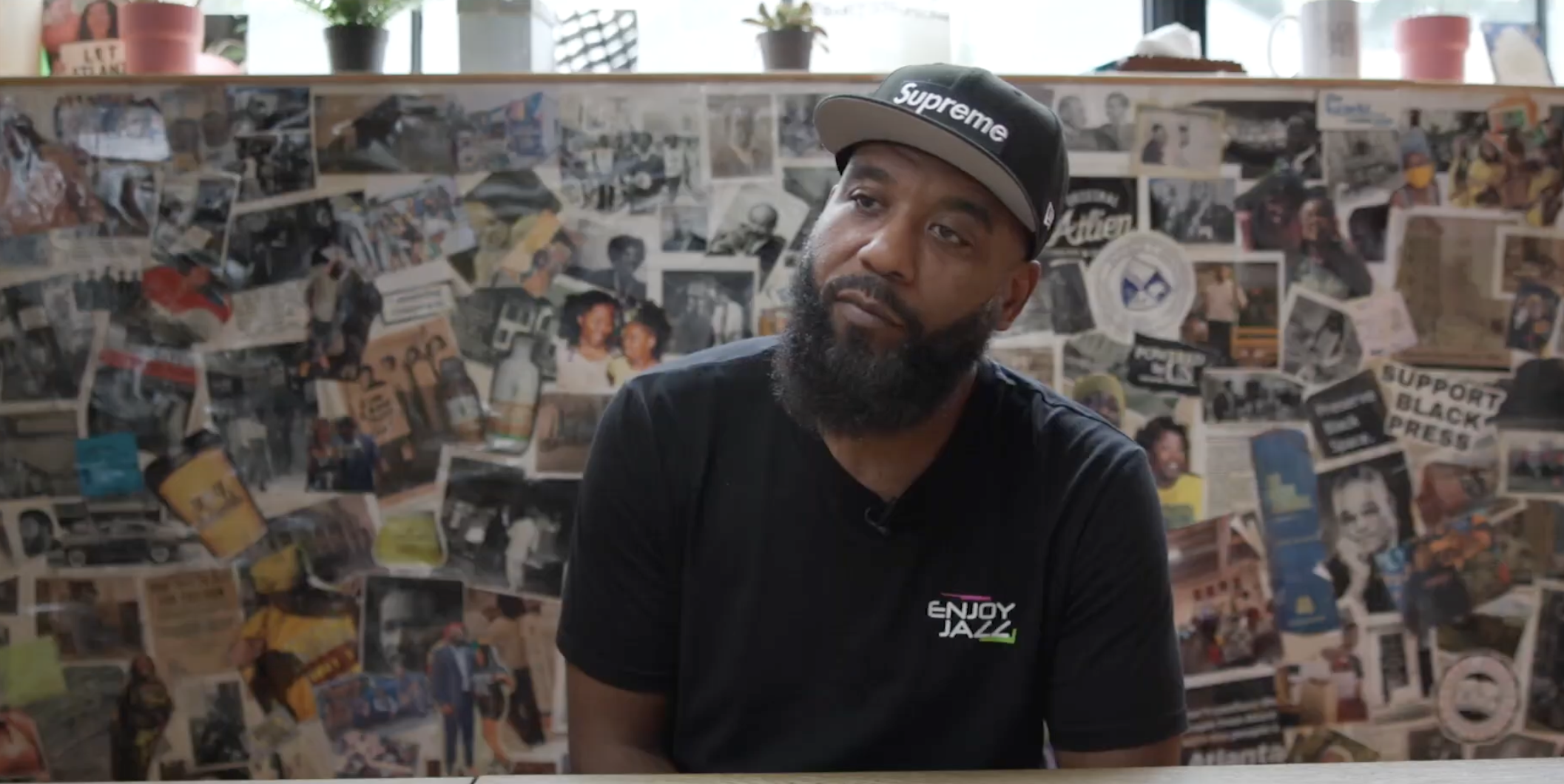
Brian Page poses for a portrait during an interview for Capital B’s oral history project. Page reflects on organizing a 66-day boycott of a neighborhood gas station, demonstrating the power of Black economic organizing and community action.
I Organized a Gas Station Boycott Because Racism Should Cost You Customers
After Brian Page watched a gas station clerk make racist remarks during the pandemic, he turned his outrage into a community movement.
Brian Page is an Atlanta community organizer who helped lead a 66-day boycott of a neighborhood gas station after employees were caught making racist remarks about Black customers. What began as one person sharing a viral video grew into a community-wide movement that demonstrated the power of collective action and Black economic organizing. In this reflection, Page shares how neighbors came together to hold a business accountable and why he believes unity is one of a community’s greatest strengths.
This transcript has been lightly edited for clarity.
During the pandemic, I was at home scrolling through social media when my cousin sent me a video. It showed a clerk at a gas station in my neighborhood saying he didn’t care about Black people or the Black neighborhood. I recognized him immediately. I couldn’t let that go.
I drove to the gas station and stood outside showing people the video before they walked inside. I told them, “Don’t spend your money here.”
When the owner came outside, he asked what I was doing. I told him I wanted people to know how they were talking about our community. Instead of apologizing, he cursed at me, insulted me and told me to leave.
The police eventually arrived. They watched the video and told me I had to leave the property because it was private property. So I did. But I also knew they couldn’t stop me from standing on the public sidewalk.
A few days later, my cousin called again. This time, the owner had called him a monkey. That’s when the boycott really began.
I stood on the sidewalk telling everyone who walked toward the store, “Don’t go in there. They don’t respect Black people. Spend your money somewhere else.”
What started with me quickly became something much bigger. My father came out to help. My mother brought my daughter. Friends started stopping by after seeing posts on Instagram. Soon people were showing up every day.
For 66 consecutive days, we stood outside that gas station. Rain or shine.
People began sharing their own stories about how they had been mistreated there. Women talked about being cursed at. Unhoused people described having buckets of water thrown on them while they slept outside. We realized this wasn’t just about one viral video. It was about a long pattern of disrespect toward our community.
What made me the proudest was that we stayed peaceful. Some people wanted retaliation. I kept telling them that wasn’t the point. The goal wasn’t violence. The goal was to show the power of Black economics. If we stopped spending money there, the business couldn’t survive.
That’s exactly what happened. Week after week, fewer delivery trucks came. The shelves became emptier. Eventually, the owner decided to sell the store.
Watching our community organize around our collective buying power was one of the most empowering experiences of my life.
Every Friday, we turned the protest into a celebration. We grilled food, played music, brought sidewalk chalk for children, made signs and invited people to spend time together. I wanted people to understand that organizing didn’t have to be fueled only by anger. It could also be fueled by joy.
People came for the barbecue, the music and the community, and they stayed because they believed in what we were doing.
When people tell me I did something special, I always stop them. I didn’t do this by myself. It took every person who showed up. Every person who refused to spend their money there. Every person who believed our community deserved better.
That’s what I hope people take away from this story. We don’t have to accept disrespect. When we stand together, we have far more power than we realize.